
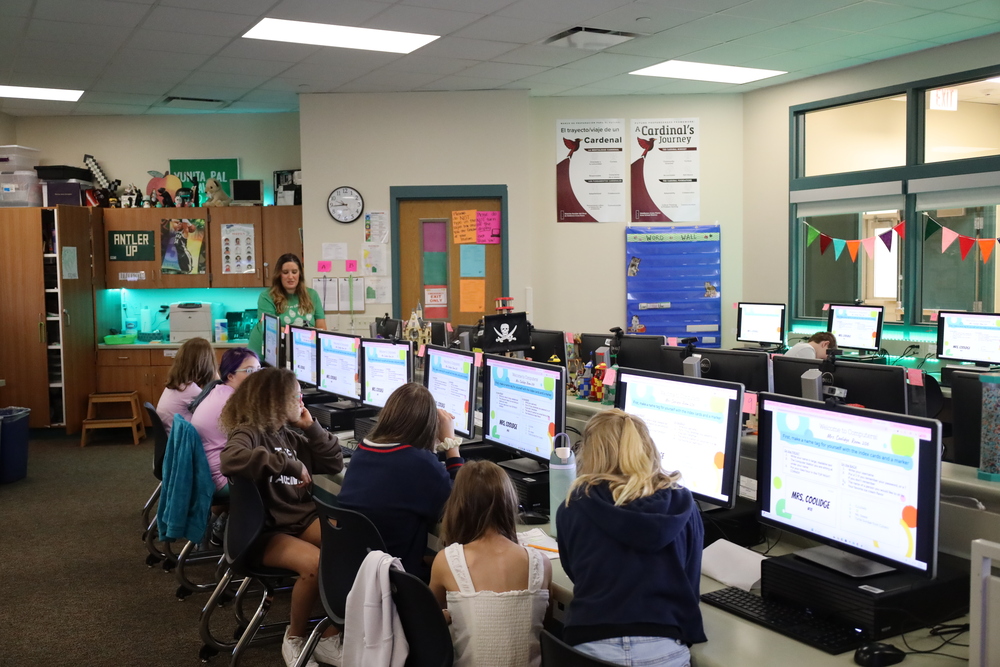
We know many families are thinking about screen time, both at home and at school. It’s something we’re thinking about here in the MCPASD, as well.
MCPASD Director of Technology Services Brian Miles and his team continue to look closely at how students are using technology throughout the school day. Our data shows that, especially at the elementary level, students have an average of less than 40 minutes of screen time during the school day. Beyond the number of minutes, we’re also paying attention to what students are doing during that time and whether technology is adding something meaningful to their learning.
Our approach is simple: tech when we need it, unplugged when we don’t. A Chromebook or iPad should be used when it strengthens learning. When a book, notebook, hands-on activity or conversation works better, that’s what we want students doing. District devices are not intended to be rewards or a way to fill free time, and screens should not replace play, movement or face-to-face interaction.
“Our goal is to be intentional about when and how technology is used,” Miles said. “Technology can be a valuable learning tool, but it shouldn’t be used just because it’s available. We want students using screens when they add value to learning and putting them away when they don’t.”
We’ve also put additional boundaries in place for our younger students. Elementary devices primarily stay in classrooms, and middle school Chromebooks are stored and charged on carts and generally remain at school. When a K–8 student needs to take a device home for academic purposes, it is unavailable between 10 p.m. and 6 a.m.
Access to online content and communication also varies by grade level. Elementary students do not have access to YouTube on District devices, while middle school students have limited access. Teachers can still share specific videos when they are needed for learning. Students in grades K–8 can only send and receive emails within MCPASD. Students in grades 9–12 can send and receive emails both within and outside of the District.
As technology continues to change, we’ll continue reviewing our practices, monitoring student use and listening to feedback from families. Our goal isn’t more screen time or less screen time. It’s making sure students are using technology at the right time, for the right reason, while still having plenty of opportunities to read, write, move, create and connect with one another.