
Kromrey Middle School ranks fifth in the state for reducing chronic absenteeism, according to data from the Wisconsin Department of Public Instruction’s school report cards.
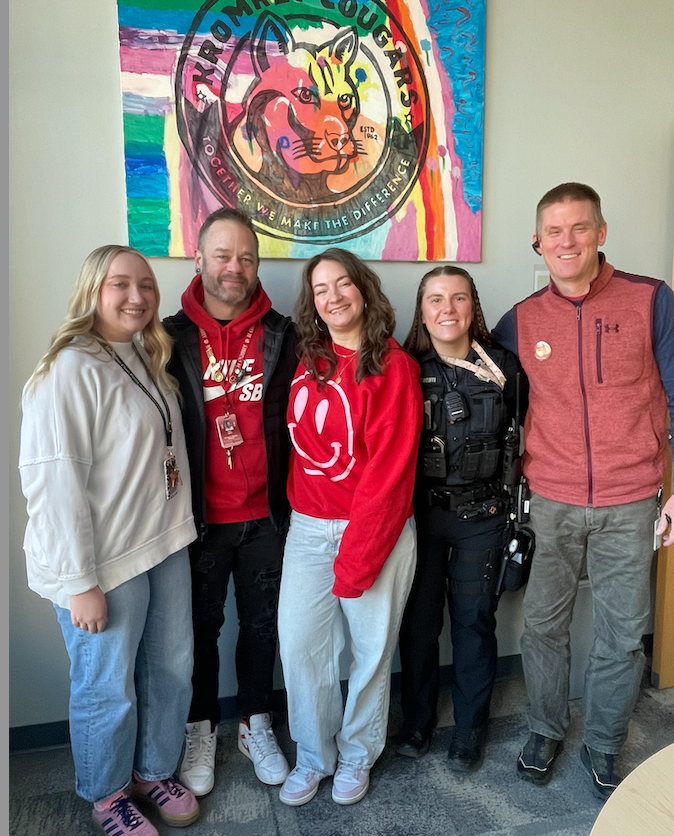
The school’s attendance team – Associate Principal Eric Engel, Social Workers Nichole Carlisle and Maddie Neuser, Dean of Students Paul Marx and School Resource Officer Cassidy Ruchti – shared how they achieved a 17.4% decrease in absentee rates from the 2022-2023 to 2024-2025 school years.
The team emphasizes a data-driven approach as well as collaborative outreach efforts with teachers and families. Neuser explained how their strategy helps the school better support chronically absent students.
“The data drives our decision making and next steps,” Neuser said. “And it’s so important to reach out to families in the spirit of collaboration and problem solving – not shaming. Students and families will be more honest about what the barriers are if they know that we're doing it in the spirit of working together as a team.”
The team’s approach to implementing effective interventions for attendance issues starts with weekly meetings.
“We've always held our weekly meetings to look at school-wide data,” Carlisle said. “We've tweaked how we make our process more efficient.”
She said that includes looking at research on effective intervention strategies.
“The research says the most effective thing to do for supporting attendance is a positive phone call home after the child returns to the building,” Carlisle said.
The team saw an impact after working with teachers on this positive reinforcement.
The school’s absence policy is to notify a student’s family once the student hits five, 10 and 15 absences. After 15 absences, Carlisle and Neuser call the student’s parents or guardians.
Neuser said these phone calls are “in the spirit of collaboration and problem solving.”
“When Nichole and I call families, we approach it from a ‘we’re checking in, and we want to support you’ perspective," Neuser said. “We see if there’s more we can be doing. This approach is oftentimes what helps get rid of those shame and guilt feelings for families and students.”
Ruchti said the initial conversations with families open the door for more communications.
“Sometimes there’s a legitimate reason that a student was not here, such as a health issue or a family situation, but it was never communicated,” Ruchti said. “Sometimes it’s not having an alarm clock or being tired from too much screen time. Attendance isn’t the real problem; it’s figuring out what the underlying problems are.”
Ruchti said better understanding a student’s home life enables the team to offer targeted support. That’s why Carlisle and Neuser often follow up the phone calls by inviting family members to school for a problem-solving meeting, where they work together to identify a student’s underlying needs.
“Usually absenteeism is a symptom of other problems,” Carlisle said.
After meeting with students and their families, Carlisle and Neuser often make referrals for therapy or help with other unmet needs.
Another win for the team was using student data to detect a pattern of absenteeism in a neighborhood where several students are English language learners and have Individual Education Programs (IEPs).
The team worked with the District and advocated for an additional bus stop in the neighborhood, which was located on the boundary of a busing zone. The new bus stop made it easier for students to consistently attend school and further reduced absenteeism.
In addition to data-driven wins, the team noted that for many students, having a routine and a sense of belonging engages them and encourages them to attend school regularly.
“When students are absent and they don't have a routine of being at school, the learning loss is huge,” Engel said. “And then if a student is struggling with anxiety or mental health that gets compounded because they're missing out. When they come back, they're in a hole.”
Marx said partnering with teachers has been key to establishing routines and a sense of belonging.
“Early on each year, we inform staff about what our team does to support students who are absent,” Marx said. “Teachers notice when students are absent, and they know our team is a path for addressing the concern. Sometimes they bring it up in the hallway, ‘I haven’t seen this student in awhile.’ And they’re aware of how to connect with our team.”
Team members agreed it’s rewarding to see the impact they’re making.
“We have better engagement with kids, and our staff has created a space where they want to come to every day,” Carlisle said. “It’s validating to see that we're actually improving outcomes for our kids and families.”
Their work isn’t simply supporting students in attending middle school every day. Their work has long-term implications, including improving graduation rates.
“We appreciate being able to build relationships with families and students,” Neuser said. “Even if a relationship came out of attendance needs, we’re able to support students in other ways. Building a relationship outside of attendance issues becomes a pathway and tool for more engagement.”
Wisconsin Public Radio interviewed Engel about the team's success on March 6. Listen to his interview.
Photo, left to right: Maddie Neuser, Paul Marx, Nichole Carlisle, Cassidy Ruchti and Eric Engel