
Wisconsin’s school funding system operates under a unique structure that often leads to confusion about how state aid, local taxes, and revenue limits work together. In our last newsletter, we explained how the District’s budget and tax levy were set for the 2025–26 school year. Below is a deeper look at the main factors that shape school funding in Wisconsin and how they impact our District.
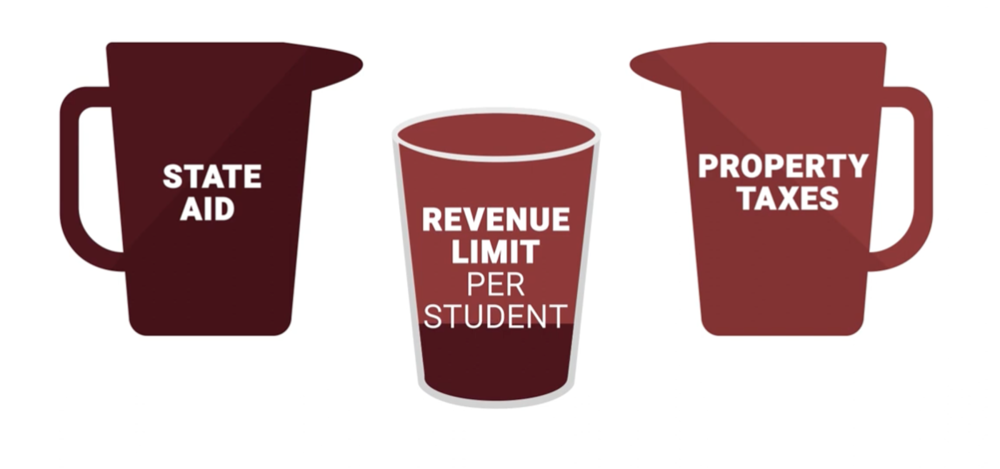
Public schools in Wisconsin are funded primarily through two sources: state general aid and local property taxes. Together, these sources make up the revenue limit, which determines the maximum amount per-pupil a district can collect to support educational programs. When the state’s share decreases, as it will for the District this year, the local share that falls to property taxpayers increases in order to maintain funding and service levels. This does not automatically result in more spendable money for schools.
Key Points for 2025–26 School Funding in MCPASD
1. MCPASD is receiving less school general aid from the state.
The state did not increase school general aid, and our District received a significant reduction. This means a larger share of our funding now must come from local property taxes.
2. MCPASD can collect an additional $325 per student, but the state did not fund this increase.
The revenue limit went up, but the state did not provide new school general aid to support it. As a result, any increase must be covered locally.
3. MCPASD is part of the 71% of districts seeing a decline in school general aid.
Our decrease is due to rising property values in our community, fewer resident students, and the state’s decision not to invest more in school general aid this year.
This story originally appeared in the November edition of our District-wide Community Compass newsletter. Check out the newsletter for the latest District news